no screenshot
47cd2a0760ac
6h agoAI47cd2a0
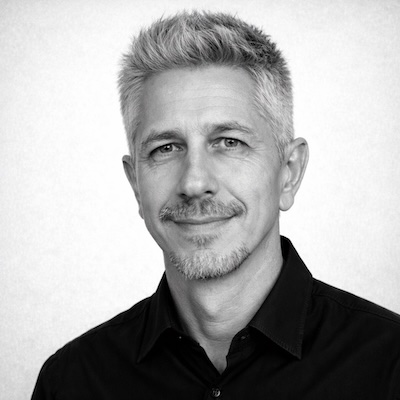
Rado Sukala
Founder, Our.one · April 2026 · live build
Our.one is a movement of users co-building the products they use. Pay $100 once — permanent vote on every product we ship + share of every dollar of revenue, forever + position in the first 1,000.
The live build
66 AI commits recorded so far · Code is free. Distribution is the moat.
The build, this week
Real commits. Real screenshots. Operator-curated for what mattered; the rest go straight from the AI session to the build log.


The portfolio · 4 products
Live products are usable now. In-build are days away. Planning products exist as collection points — patrons name what we refuse from the named incumbent and what they want the alternative to do.
The NO. catalog · 5 constitutional refusals
Each refusal is wished for by a member, voted on by others, and locked under a constitutional commitment. Cited from the incumbent’s own engineering blog or public statements. See the full catalog →
The build, live · 66 AI commits recorded
Every AI session under Our.one writes a Reasoning trailer with its commit — what constraint forced this, what alternatives were considered, what tradeoff was accepted. The terminal below cycles through the most recent ones. Hover to pause and read.
Homepage Phase 2C+2D: refusal cards strip + AI terminal panel
$100 once. Lifetime.
The 4× tier · finite resource, named in the Constitution
1,000 positions remain
in the 4× tier.
Patrons 1–1,000 earn 4× weight in the Patron pool of every Our.one product, present and future. After #1,000, the 3× tier opens. The tier finally closes when the first paid flagship ships revenue. $100 once, lifetime — payment opens when Stripe wires up.
0 of 1,000 positions in the 4× tier filled. The number ticks down every time someone joins.
The Inversion
0%
Of every dollar a startup spends on ads, zero flows to the humans who bring users to the product. It goes to Meta, Google, and TikTok.
90%
Of every dollar of net revenue under Our.one flows back to humans — creators, users, ambassadors, and everyone who helps build the audience.
The proof
Revenue share to non-employees is the most legally boring payment structure in the modern economy. Four companies have been doing it for fifteen years.
Our.one applies the same instrument — revenue-share contracts — systematically to every human role in the system. Not just creators.
The Constitution
Read what’s locked in — and what each clause means for you.
90% of net revenue flows to humans, after direct costs.
Translation: when products make money, you get the bulk of it. Not VCs. Not Wall Street. The people who built it and use it.
The Our.one Fee is 10%. Raising it requires a supermajority vote.
The parent company takes 10% to pay for shared legal, treasury, infrastructure. Capped by the contract. Cannot be raised unilaterally.
No tokens. No blockchain. No securities.
Not Web3. No speculation. No rugpull. Revenue share is a contract, paid in dollars via Stripe.
No multi-level attribution. Single-level only.
If you bring someone, you earn from them. When they bring someone else, that's their share — not yours. The line that separates distribution from pyramid.
No role is sold. Earned by activity, never purchased.
You can't pay to skip the merit gate. Roles are earned by what you do — not by what you pay to be called.
No pay-to-play. No tiered entry fees.
We extend this broadly: pay-with-attention is the same as pay-to-play. No paid boost. No promoted posts. No engagement-ranked feeds.
Exit at any time. Earned shares remain.
Stop paying anytime. Your earned shares stay. No clawback. No vesting cliff. No lock-in.
Transparent ledger. Every dollar auditable.
Where every dollar of revenue goes is public. The treasury is auditable. Members can see the math.
No VC primary round, ever.
Venture capital requires extractive returns we constitutionally can't deliver. Revenue-based debt is fine. Dilutive equity from VCs is forbidden.
Declared splits sum to 100%. No hidden reserves.
Each product declares which roles get which percentage. The numbers add up. No 'and the founders also keep 30%' footnotes.
Direct costs covered before distribution.
Stripe fees, hosting, taxes — paid first. Then 90% of what's left flows to humans. The 90% is honest because the math is honest.
The contract
Be the first human to sign the Constitution. Free. Public. Permanent.
Signed
“The AI age will decide which products live based on which have millions of real humans behind them. Our.one is the wall. I hope you’ll be part of it.”
Rado Sukala
Founder, Our.one
Stay in the loop
One note when Founding Patron payment opens. One note when the first flagship vote closes. Nothing else.